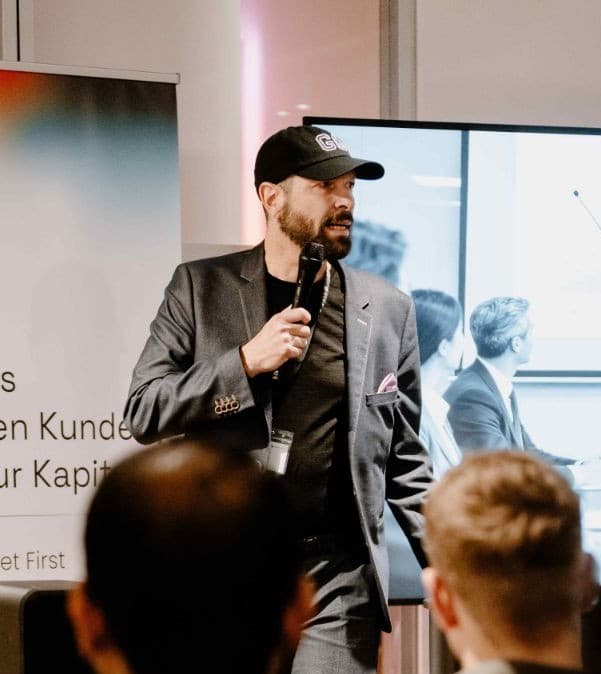
Stell dir vor die Güte deines Pitches entscheidet über den Fortbestand des Unternehmens
Was Führungskräfte von Start-Ups lernen können
Es gibt häufig mehr Einigkeit darüber, warum Umsetzung schwierig ist, als darüber, wie man sie möglich macht.
Was verbindet Gründer:innen und Führungskräfte wirklich – jenseits von Rollen, Titeln und Organisationslogiken? Mehr, als man auf den ersten Blick vermutet.
In diesem Gespräch mit Georg Fischer geht es um Innovation, Führung und die menschliche Seite von Veränderung. Um die Frage, warum gute Ideen oft nicht an Technologie scheitern, sondern an Umsetzung. Warum echte Innovation weniger mit Tools als mit Haltung zu tun hat. Und warum Gründer:innen und Führungskräfte womöglich mehr voneinander lernen können, als beide Seiten ahnen.
Ausgehend von Erfahrungen zwischen Konzernwelt, Start-Up-Coaching und Innovationsarbeit entsteht ein Gespräch über Mut, Klarheit, Umsetzung und darüber, was Fortschritt eigentlich menschlich tragfähig macht.
Ein Interview über die Kraft guter Fragen, über Pitches als Vertrauensarbeit und darüber, warum Zukunft oft dort beginnt, wo Menschen Verantwortung übernehmen.
Wenn du an deine Zeit als Head of Innovation für die SAP Österreich zurückdenkst, hast du dann ab und an mal eine Art Déjà-vu, wenn du heute in deiner Rolle für das Gründungszentrum Mannheim mit Gründer:innen sprichst?
Ja, absolut. Gerade in Gesprächen mit Gründer:innen habe ich oft Déjà-vus – weil viele Dynamiken zeitlos sind.
Meine Zeit in Österreich hat mich vor allem in zwei Dingen geprägt.
Erstens: Innovation scheitert selten an Technologie – sondern meist an Umsetzung.
Damals war ich neu im Markt, kannte weder Kunden noch Ökosystem und musste schnell Relevanz schaffen. Mein Ansatz war deshalb sehr pragmatisch: Wir sind mit echten Geschäftsproblemen in Unternehmen gegangen, Bewusst nicht mit POCs oder Fingerübungen, und haben uns vorgenommen, innerhalb einer Woche konkrete Lösungen sichtbar zu machen.
Das hat erstaunlich oft funktioniert. Mehrfach konnten wir zeigen: Wenn die richtigen Menschen zusammenkommen, lassen sich reale betriebswirtschaftliche Mehrwerte in sehr kurzer Zeit schaffen.
Die eigentliche Erkenntnis kam aber danach: Selbst wenn ein Problem gelöst ist, beginnt die eigentliche Arbeit erst jetzt. Warum wird etwas trotz erkennbarem Nutzen nicht umgesetzt? Warum verlieren Organisationen Geschwindigkeit, erhöhen Komplexität oder vertagen Entscheidungen?
Diese Fragen haben mich tief beschäftigt und sie haben meinen Blick verändert. Ich habe verstanden: Innovation ist weniger ein Technologie als ein menschliches Thema. Genau daraus entstand mein Interesse an Behavioral Science, mentalen Modellen und später auch an KI als Werkzeug, um Veränderungsprozesse wirksamer zu machen.
Mein Learning bis heute: Wert entsteht nicht nur durch gute Ideen, sondern durch die Fähigkeit, sie in Umsetzung und Skalierung zu bringen.
Zweitens: Innovation braucht Werte, nicht nur Geschwindigkeit.
Österreich hat mich noch etwas anderes gelehrt: Fortschritt funktioniert nur nachhaltig, wenn er mit Menschen und ihren Werten verbunden ist.
Ich habe dort viele werteorientierte Menschen erlebt, die wirklich gestalten wollten. Das hat meinen Blick auf Innovation erweitert: Als Design Thinker denkt man ohnehin stark vom Kunden und seinen Bedürfnissen her und nicht vom Produkt aus. Gleichzeitig ist mir noch deutlicher geworden, dass auch die Menschen, die Ideen später umsetzen, früh mitgedacht und einbezogen werden müssen.
Gerade in Europa sehe ich darin eine große Stärke. Wir brauchen Innovation nicht nur für Wettbewerbsfähigkeit, sondern auch, um Werte in die Zukunft zu tragen.
Wenn ich es zuspitzen müsste, haben mich aus dieser Zeit zwei Fragen bis heute begleitet:
- Wie bringen wir Innovation wirklich in die Skalierung?
- Und wie gestalten wir Fortschritt so, dass er dem Menschen dient?
Diese beiden Spannungsfelder prägen auch heute noch viele meiner Gespräche mit Gründer:innen.
Warum glaubst du war einer der Reflexe der Organisationen einen Proof of Concept (PoC) machen zu wollen statt sich einem realen Problem und dessen Umsetzung in kürzester Zeit zu widmen? War das evtl. eine Art Immunreaktion des Unternehmens? Wenn wir DAS in 4 Wochen gelöst bekommen, was bedeutet das dann für unsere Strukturen?
Ja, ich glaube tatsächlich, dass es oft eine Art Immunreaktion ist.
Ich erinnere mich an eine Diskussion, die ursprünglich auf zehn Minuten angesetzt war und am Ende fast zwei Stunden dauerte. Der Kern war immer derselbe: Warum arbeiten wir an einem echten Geschäftsproblem? Warum nicht erst ein PoC, um zu zeigen, dass es grundsätzlich funktioniert?
Hinter dieser Frage steckt aus meiner Sicht etwas Tieferes:
Viele Organisationen zweifeln nicht daran, dass ein Problem existiert – sondern daran, dass sie in der Lage sind, eine Lösung wirklich schnell umzusetzen.
Ein PoC ist in diesem Kontext eine Art sicherer Raum. Er beweist technologische Machbarkeit, ohne die Organisation wirklich herauszufordern. Ein reales Problem hingegen stellt sofort die nächste, unbequemere Frage:
Wenn wir das tatsächlich schnell lösen können – was bedeutet das für unsere Strukturen, Prozesse und Entscheidungswege?
Und genau da entsteht Spannung.
In B2C-Umfeldern entscheidet oft eine Person. Geschwindigkeit ist möglich. In B2B-Organisationen hingegen sind viele beteiligt: unterschiedliche Interessen, gewachsene Strukturen, historische Entscheidungen. Das führt dazu, dass selbst gute Lösungen ausgebremst werden.
Was mich damals wirklich überrascht hat:
Es gab häufig mehr Einigkeit darüber, warum Umsetzung schwierig ist, als darüber, wie man sie möglich macht. Dieses Mindset war tief verankert und eine Art eingespielte Kultur-Mechanik.
Deshalb habe ich gelernt:
Der Wunsch nach einem POC ist selten nur fachlich begründet. Er ist oft ein Signal für fehlendes Vertrauen in die eigene Umsetzungsfähigkeit.
Oder zugespitzt:
Organisationen schützen sich nicht vor schlechten Ideen – sondern vor den Konsequenzen guter Lösungen.
Und genau dort beginnt die eigentliche Führungsaufgabe:
Nicht nur Innovation zu ermöglichen, sondern die Organisation befähigen, sie auch wirklich umzusetzen.
Warum ist es deiner Erfahrung nach so wichtig, die Menschen beim Thema Innovation und Fortschritt mit zu betrachten? Oder anders gefragt, was droht schief zu gehen, wenn dies zu kurz gerät?
Weil Innovation immer zuerst ein menschlicher Prozess ist und erst danach ein technologischer.
Sobald Veränderung beginnt, verlassen Menschen ihre Komfortzone. Und das bedeutet immer auch Risiko: Risiko zu scheitern, sich angreifbar zu machen, Status zu verlieren oder Entscheidungen treffen zu müssen, deren Ausgang offen ist. Genau deshalb ist Fortschritt nie nur eine methodische oder technologische Frage, sondern immer auch eine zutiefst menschliche.
Was mich gerade in der Start-Up-Welt fasziniert, sind deshalb intrinsisch motivierte Menschen. Sie sind oft der eigentliche Motor von Veränderung.
Wenn man diesen menschlichen Faktor aus Innovation heraus denkt, drohen aus meiner Sicht zwei Dinge.
Erstens entsteht Mittelmaß.
Dann dominiert oft der kleinste gemeinsame Nenner: Entscheidungen werden auf Konsens statt auf Wirkung optimiert, Innovation wird vorsichtiger, kleiner und verliert Ambition.
Zweitens fehlt der Mut, an die relevanten Probleme zu gehen.
Dann wählt man schnell den Weg des geringsten Widerstands, statt dort hinzuschauen, wo echte Veränderung auch Reibung erzeugt.
Und genau dort wird Innovation oft entweder mutig oder belanglos.
Für mich braucht Fortschritt deshalb Menschen, die gestalten wollen, Verantwortung übernehmen und Freude an Veränderung haben. Denn wer Menschen ernst nimmt, ihre Motivation, ihre Bedürfnisse, ihre Bedenken , entwickelt meist auch bessere Lösungen.
Am Ende gibt es hinter jeder Innovation einen Menschen: einen Kunden, einen Patienten, einen Mitarbeitenden, einen Bürger.
Und deshalb glaube ich sehr stark: Technologie hat keinen Selbstzweck. Wert entsteht erst dort, wo sie für Menschen spürbare Verbesserung schafft.
Wenn wir das ausblenden, riskieren wir etwas Gefährliches: technologische Beschleunigung ohne echten Fortschritt.
Nun kennst du die Rolle einer Führungskraft im Konzern mit disziplinarischer und Budgetverantwortung und dir stehen Gründer und Gründerinnen gegenüber, wenn du coachst. Wo gibt es trotz dieser unterschiedlichen Welten Überschneidungspunkte, in dem sich beiden Rollen ähneln?
Ich glaube, die Überschneidungen sind größer, als viele denken.
Wenn man auf den Kern schaut, eint gute Führungskräfte und Gründer:innen vor allem eines: Beide wollen etwas bewegen. Sie wollen Ziele erreichen, Verantwortung übernehmen und gemeinsam mit Menschen Wirkung erzeugen.
Das ist im Grunde derselbe Antrieb.
Die Unterschiede liegen oft weniger im Mindset als in den Rahmenbedingungen.
Gründer:innen agieren meist mit mehr Freiheitsgraden, aber weniger Ressourcen. Führungskräfte im Konzern verfügen oft über mehr Hebel, bewegen sich dafür aber stärker innerhalb von Strukturen, Regeln und organisationalen Leitplanken.
Aber die Grundmechaniken ähneln sich erstaunlich stark:
Menschen mitnehmen. Entscheidungen unter Unsicherheit treffen. Prioritäten setzen. Ressourcen bündeln. Widerstände überwinden. Richtung geben.
Und vielleicht am wichtigsten: In beiden Rollen verlässt man bewusst die Komfortzone. Wer gründet oder führt, übernimmt Verantwortung für etwas, dessen Ausgang nie vollständig kontrollierbar ist.
Vielleicht liegt genau darin die größte Gemeinsamkeit:
Gute Gründer:innen und gute Führungskräfte sind beides Menschen, die nicht nur verwalten wollen, sondern Zukunft mitgestalten wollen.
Wenn eine Führungskraft intern um Ressourcen wirbt und ein Start-up extern um Kapital pitcht, sind das am Ende zwei verschiedene Disziplinen oder zwei Varianten derselben Führungsaufgabe?
Ja, es gibt Unterschiede – aber ehrlicherweise weniger, als man denkt.
Die offensichtlichen Unterschiede liegen auch hier eher in den Rahmenbedingungen. Im Konzern gibt es oft Leitplanken: Standard-Foliensätze, Style Guides, Terminologien, Vorgaben. Das kann Stabilität geben, aber auch sperrig sein.
Start-Ups haben auf den ersten Blick mehr Freiheit. Sie können ein Pitch-Deck konsequent auf ein Ziel hin bauen – in Sprache, Dramaturgie, Story, Auftreten. Oft gilt dort stärker: What you see is what you get.
Aber der eigentliche Unterschied liegt für mich gar nicht in der Form – sondern darin, wie bewusst man auf das Publikum eingeht.
Ich habe irgendwann für mich entschieden: Eine Präsentation ist wie ein Anzug. Wenn sie nicht sitzt, merkt man das die ganze Zeit. Und wenn sie nicht zu dir passt, spürt das auch dein Gegenüber.
Deshalb habe ich bewusst begonnen, auch im Konzern weniger entlang von Standards und stärker entlang der Menschen im Raum zu präsentieren. Weniger „Was muss auf Folie 12 stehen?“ und mehr: "Was braucht dieses Gegenüber gerade, um Vertrauen zu gewinnen?"
Denn ob Vorstand oder Investor – am Ende geht es in beiden Fällen darum, Ressourcen für eine Zukunftsidee zu mobilisieren.
Und darin ähneln sich Business Case und Pitch sehr.
Beide brauchen Klarheit, Glaubwürdigkeit und eine überzeugende Geschichte. Beide müssen zeigen: Warum ist das relevant? Warum jetzt? Warum wir?
Vielleicht der wichtigste Shift für mich war ein Gedanke, den ich einmal gehört habe:
„Think about into which listening are you talking into.“
Also: In welches Zuhören spreche ich eigentlich hinein?
Das hat meinen Blick verändert. Denn gute Präsentationen entstehen nicht primär aus guter Senderlogik, sondern aus tiefem Verständnis für die Bedürfnisse des Empfängers.
Und genau da treffen sich Gründer:innen und Führungskräfte wieder.
Trotz den Gemeinsamkeiten kann eine schlechte Präsentation im Start-up-Kontext das Ende des Unternehmens bedeuten, weil es zum Beispiel der letzte mögliche Investor war, vor dem es nicht so gut lief.
Ja, absolut.
Eine schlechte Präsentation im Konzern ist oft einfach ein weiteres nerviges Meeting. Eine schlechte Präsentation im Start-up kann das Ende der Reise bedeuten.
Denn im Start-up-Kontext steht bei einem Pitch oft sehr viel mehr auf dem Spiel. Vielleicht ist es der letzte Investor in einer kritischen Phase. Vielleicht hängt daran die nächste Finanzierungsrunde, das Team oder sogar das Überleben des Unternehmens.
Das verändert alles.
Plötzlich ist Kommunikation nicht mehr nur eine Management-Skill, sondern existenziell.
Und das passt zu dem, was Eric Ries über Start-ups sagt: Sie operieren unter Bedingungen extremer Unsicherheit. Genau deshalb wird ein Pitch dort schnell zu mehr als einer Präsentation. Er wird zu einem Moment, in dem Strategie, Storytelling, Vertrauen und persönliche Überzeugung zusammenkommen müssen.
Im Konzern gibt es oft mehr Sicherheitsnetze. Schlechte Meetings lassen sich korrigieren. Entscheidungen lassen sich wieder aufnehmen. In Start-ups gibt es diese zweite Chance nicht immer.
Und ich glaube, gerade diese Fallhöhe prägt auch viele Gründer:innen. Sie pitchen oft nicht nur ein Modell – sie pitchen Überzeugung unter Risiko.
Das ist ein anderer Druck. Aber manchmal auch eine andere Klarheit.
Denn wenn viel auf dem Spiel steht, wird oft sichtbarer, worauf es wirklich ankommt:
Nicht perfekte Folien, sondern Präzision, Energie und Vertrauen.
Vielleicht ist genau das die größte Lehre daraus:
Im Start-Up kann Kommunikation kein Beiwerk sein. Sie ist Teil des Geschäftsmodells.
Was können Führungskräfte von Start-Ups lernen, wenn es darum geht, in entscheidenden Gesprächen nicht nur zu präsentieren, sondern echte Verbindung und Wirkung zu erzeugen?
Eine meiner stärksten Erkenntnisse war: Man kann nicht über Individualisierung sprechen – und gleichzeitig mit Standardbotschaften kommunizieren.
Ich fand es immer paradox, in einer Welt von maßgeschneiderten Lösungen mit einem Vortrag „von der Stange“ aufzutreten. Für mich passt das nicht zusammen.
Gerade darin können Führungskräfte viel von Gründer:innen lernen: das Gegenüber nicht als abstrakte Zielgruppe, sondern als Individuum wahrzunehmen. Denn echte Verbindung entsteht nicht durch Standardpräsentationen, sondern durch Relevanz.
Wenn sich Führungskräfte in Sachen Agilität etwas von Start-ups abschauen können – welche „Scheibe“ sollten sich Gründer:innen umgekehrt von erfahrenen Führungskräften abschneiden, sobald aus Aufbruch echte Skalierung wird?
Wenn ich mir etwas wünschen würde, das sich manche Start-ups stärker von erfahrenen Führungskräften abschauen, dann ist es Klarheit und Präzision.
Was mir manchmal auffällt: Gründer:innen arbeiten seit Jahren an ihrem Thema – und wenn sie darüber sprechen, wirkt es dennoch manchmal, als formulierten sie ihren Kern gerade zum ersten Mal. Da fehlt mitunter die Schärfe: Was ist wirklich das eine entscheidende Problem, das wir lösen? Was macht uns einzigartig? Warum braucht es uns?
Gerade deshalb bin ich ein großer Fan des Elevator Pitches – nicht primär als Investoren-Tool, sondern als Klarheitsübung. Die ersten zehn Versionen sind nicht für den Venture Capitalist, sondern für einen selbst.
Denn gute Gründerkommunikation braucht nicht nur Leidenschaft, sondern Wiederholbarkeit. Eine überzeugende Antwort auf die Kernfragen:
- Welches Problem lösen wir?
- Für wen?
- Was ist unser einzigartiger Mehrwert?
- Wie entsteht daraus ein tragfähiges Geschäft?
Und das ist etwas, was erfahrene Führungskräfte oft sehr gut können: Komplexität verdichten, Botschaften schärfen und Orientierung geben.
Du sagtest mir auch einmal, dass viele Gründer:innen eine gute Idee mit einem validierten Geschäftsmodell verwechseln. Was ist aus deiner Sicht der häufigste Denkfehler in dieser frühen Phase und warum beginnt echte Evidenz oft nicht mit einem Prototypen, sondern mit Gesprächen?
Ein häufiger Irrtum ist zu glauben: Ich habe eine gute Idee, ein Pitch Deck und zehn starke Folien – also bin ich finanzierungsreif.
So funktioniert Gründung selten.
Begeisterung, technische Kompetenz und eine starke Idee sind eine großartige Basis – aber eben nur der Anfang. Solange sich alles nur auf PowerPoint abspielt und noch niemand mit echten Menschen gesprochen, etwas getestet oder Annahmen überprüft hat, fehlt das Entscheidende: Evidenz.
Deshalb sage ich Gründer:innen immer: Geht zuerst raus und sprecht mit Menschen.
Nicht nur, um eine Lösung zu validieren – sondern schon, um die Problemhypothese zu prüfen.
- Existiert dieses Problem wirklich so, wie ich glaube?
- Ist es relevant genug?
- Wird es so erlebt, wie ich es annehme?
Das wird oft unterschätzt.
Denn die ersten starken Beweise sind häufig keine Prototypen, sondern Geschichten. Zitate. Beobachtungen. Echte Erfahrungen von Menschen, die dieses Problem haben.
Und diese Evidenz ist enorm kraftvoll.
Wenn Gründer:innen nicht nur Features pitchen, sondern aus der Lebensrealität ihrer Nutzer argumentieren können – mit echten Geschichten, echten Spannungen, echten Schmerzen –, entsteht Glaubwürdigkeit.
Nun ist das Wort „Krise“ überall zu hören. Was stimmt dich zuversichtlich, wo du überwiegend mit Menschen arbeitest, die in dieser Zeit gerade gründen.
Genau diese Menschen, die gerade gründen, stimmen mich zuversichtlich.
Ich hatte kürzlich ein Erlebnis, das mich sehr berührt hat. Ein Start-up, das ich vor einigen Monaten in einer Jury nur mit einer Idee erlebt hatte, stand plötzlich auf einer Konferenz mit einem echten Prototypen auf dem Stand eines etablierten Unternehmens. Diese Entwicklung in so kurzer Zeit zu sehen, hat mich unglaublich gefreut.
Und genau das gibt mir Hoffnung.
Ich erlebe jeden Tag Menschen mit Enthusiasmus, Mut und einer fast kompromisslosen Bereitschaft, für ihre Ideen zu arbeiten. Menschen, die nachts an Lösungen bauen und morgens im Coaching sitzen, weil sie an etwas glauben.
Diese Energie ist ansteckend.
Gerade in Zeiten, in denen viel von Krise gesprochen wird, sehe ich darin oft etwas anderes: Gestaltungskraft.
Denn ich bin überzeugt, die Ideen und Talente, die wir brauchen, um große Herausforderungen zu lösen, gibt es längst. Unsere Aufgabe ist es, ihnen Wege in die Wirkung zu eröffnen.
Was mich optimistisch macht, ist deshalb nicht trotz dieser Zeit, sondern gerade in dieser Zeit zu sehen, wie viele Menschen Verantwortung übernehmen wollen.